…Raises concerns over opposition suppression
The Human Rights Writers Association of Nigeria (HURIWA) has warned against what it described as a dangerous convergence of judicial delay, political interference, and institutional uncertainty capable of undermining Nigeria’s multiparty democracy ahead of the 2027 general elections.
HURIWA also expressed serious concern over the failure of the Supreme Court of Nigeria to deliver timely judgments on the protracted leadership crises in the Peoples Democratic Party (PDP) and the African Democratic Congress (ADC)—two major opposition platforms whose internal stability, it noted are critical to democratic competition.
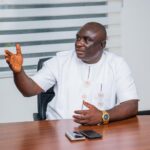
The rights group in a statement by its national coordinator, Emmanuel Onwubiko, noted that while the apex court has concluded hearings on multiple appeals arising from the disputes, it has yet to fix a date for judgment.
It stressed that the development is deeply troubling given the proximity of constitutionally regulated electoral activities, particularly against the backdrop of the directive to political parties by the Independent National Electoral Commission (INEC), to submit membership registers by May 10, 2026, while party primaries are scheduled to hold between April 23 and May 30, 2026.
HURIWA also noted that campaign activities are expected to commence later in the year, thereby making clarity of party leadership an urgent necessity rather than a procedural luxury.
The rights organisation further warned that the absence of clear, legally recognised leadership structures within both parties has already triggered confusion, paralysed internal decision-making processes, and placed aspirants in a precarious state of uncertainty regarding their political futures.

HURIWA particularly raised alarm over what it termed ‘disturbing political signals’, particularly reports that factions within the PDP—allegedly aligned with influential figures in the ruling All Progressives Congress (APC) and close to the administration of President Bola Ahmed Tinubu—have proceeded with activities such as the sale of nomination forms despite the pendency of the case before the court.
According to HURIWA; “This situation raises fundamental questions about the integrity of the judicial process and whether certain actors may be acting on presumed outcomes.
“If left unchecked, such perceptions could severely damage public trust in the neutrality and independence of the judiciary,” it stressed.
HURIWA also expressed concern over the role of the Federal Capital Territory Minister, Nyesom Wike, whose political alignment within the PDP crisis has continued to generate controversy, further complicating the party’s internal cohesion and external credibility.
It particularly said that the implications of the delay extend to the broader architecture of Nigeria’s democracy, thus warned that a weakened or fragmented opposition landscape could inadvertently pave the way for a dominant-party system, thereby reduce electoral competitiveness and limit voters’ ability to make meaningful choices.
The association argued that democracy thrives on the strength of viable opposition, institutional balance, and the timely administration of justice—all of which are now being tested by the current situation.
HURIWA therefore called on key international partners—including the governments of the United States, Canada, and the United Kingdom—to closely monitor Nigeria’s judicial and electoral processes.