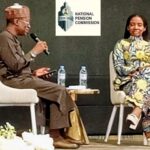
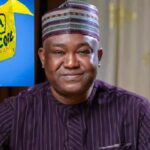
Senator Suleiman Othman Hunkuyi represents Kaduna North Senatorial District of Kaduna State on the platform of the All Progressives Congress (APC). He was a guest of a recent media chat on Liberty Television Kaduna where he lampooned the administration of Governor Nasir Ahmad el-Rufai for brainwashing members of the public with falsehood over the rejected loan. He pulled the rug off the feet of the state government when he disclosed that the loan, contrary to claims by state government officials, was never for the development of the state infrastructures, among other issues. Below is the transcript of the interview, as monitored by ISHAKU YOHANNA
The Senate unanimously rejected the request by the Kaduna State Government to borrow $350 million from the World Bank. What informed the resolution of the lawmakers?
You need to know the procedure for accessing and viability of such request is an objective procedure. One erroneous fact I wish to correct quickly is that the decision to reject the loan was only hinged on the decision of the three senators from Kaduna. No, it was the decision of the entire Senate. The Senate comprises 109 elected representatives, and each, on their own honour , is in that chamber to objectively make decisions they believe tally with their conscience. The decision to reject that loan was a decision of the entire Senate. It was only coincidence that the Senate was on the same page on the need to reject the loan request. So, we the three senators from Kaduna State need to be given a pat on the back, as we did toe the line of saying: ‘Nasiru is my brother, and that since he is the governor, I should tally along the line that my brother wants’. It was a decision based on our conscience; based on objective analysis of the needs, the necessity, and the capacity for the borrower to offset the amount in question. The President of the Senate has clearly given reasons why the loan request was rejected. One of them is that from 1960 to 2018, the loan portfolio of Kaduna state stood at $231 million. Regardless of what has been borrowed and what has been paid over time, the loan stood at $231 million, making Kaduna State the second highest most indebted among the 36 states. If the state is allowed to borrow $350 million, you would then have a total debt burden of almost $700 million! The Senators viewed the fact that if such loan is approved, the debt profile will be excruciating for the state. One of the gauges is to determine whether or not the borrower has the capacity to borrow and offset what he has to pay or what the state has to pay and yet do the minimum primary obligations that is necessary for the state. All parameters and measurements were returned negative against the indices of reasons for borrowing $350 million.
Now, the Senate is not in the position to say, “Okay, it is too much, now let us give you $100 million.” No! The credit numbers of the two loans from the World Bank put together $350 million to finance one and the same thing for five years. Another reason is that the state lacks the capacity to repay without plunging into serious problem. Even if the governor is reelected, he will only serve for another four years, and then another government will come and be faced with the consequences of the lack of capacity and ability to do two things together: one, the basic obligations of state; and then servicing the same loan. There are so many reasons but these are on the frontline.
From your submission, it will seem that you found a basis for not approving the loan. Coincidentally, the Federal Government, which is the platform that the state is using to access this loan and your colleagues in the House of Representatives, went through these same documents for the loan request and found it sufficient enough to okay it. Why is it difficult for the Senate to toe the same line?
You have answered your question, because the two situations you have put have different obligations. The Federal Government is not obliged to access the loan. That is why the Constitution bestowed it on the National Assembly to do. You cannot be the borrower; be the spender and at the same time be the one to test whether what has been done is worth what has been borrowed. It’s a division of labour. So, the Federal Government is not responsible for that. And that is part of the reason why the National Assembly decides with those parameters. Mark you, part of the indices of gauging the loan request comes from the Executive – the DMO (Debt Management Office). How much does Kaduna state owe?; how much does Lagos State owe?; how much does Oyo owe?? All these are facts that are available at the DMO. Part of what I have told you now is from the report coming from the DMO and the DMO is just a section or unit under the Ministry of Finance. Hence, part of what we used to gauge it is definitely from the Executive. Borrowing is not the issue, but what the money is put to use.
Governor el-Rufai had said the state government has satisfied the World Bank conditions for the loan. Why did the Senate turn it down?
When you come back to the money, how is it going to be utilized? The drawdown is broken into five years; and within this five years, Kaduna State Government is not only rushing, but running to spend $170 million out of the $350 million in the first year. Why the rush? Government is a continuous process; so, why the rush? Could it be for development of course? No! Since the scope of the drawdown of the loan is five years, why the rush to spend $170 million in one year?
Secondly, the Kaduna State Government, using the media, has brainwashed the general public that this loan is going to be repaid in 50 years. I tell you that it is a lie. The loan repayment schedule is 25 years. So, why lie to the general public? Why lie to the State Assembly; why lie to the National Assembly? Thirdly, on the application of the funds, I have shown here the schedule of drawdown in five years in 11 different catchments. These 11 different catchments totaled $350 million. Yet, we have been told that schools are to be renovated; schools are to be built; roads are to be constructed; some are to be rehabilitated. I have not seen in any of the 11 schedules of drawdown the narration that so and so amount would be applied for road construction. Why another lie again?
Here is the loan agreement (pointing at some of loan documents); it is an official document. This is the financing agreement of that loan between Kaduna State Government and the World Bank. These are facts that have been enumerated. Why is Kaduna State Government lying to the public? Why are they presenting application of funds as if the $350 million would be spent on infrastructure, while actually the entire spending is in three parastatals, and all of them are appendages to the office of the Governor? KADGIS is one of them; the Revenue Board under the Governor’s Office is another; and then the office of the Special Adviser. Where are the projects? How does KADGIS build roads? How does Internal Revenue Service of the state build schools? Definitely somebody somewhere is fooling members of the public! (Pointing to documents on the loan agreement), Here is the division, one after the other. And item one says ‘Simplify business process; reduction in the time required to start a business deal with construction permit and register properties.’ That is under KADGIS, and N7.6 billion will be spent for ease of doing business under KADGIS to register property. How much was spent in establishing AGIS as a digital registry in Abuja? How much did Nasarawa State Government built and now operating a digital land registry? As KADGIS is today, it has been upgraded already. So, why are we spending N7.6 billion, to do that? What they have told the general public is simply a coated lie; that is not what has been provided in the financing agreement.
People might have been surprised that being in the Senate, that perhaps you know better than the governor the requirements that need to be met for such a loan to be granted, which make them feel that there should have been consultations between you and the Kaduna State Government as a form of guide to the government to access the loan. Was there any consultation?
Even if there was in the first instance, we would have advised that $350 million loan is too much for what Kaduna state can carry. However, I was not contacted. Two, even if they agree to borrow less, still it is on us to guide and make sure the application of those funds would be as indicated. Three, like my colleagues have asked: if you talk of roads, how many would be buil tin Kaduna Central, and the zone I belong? Don’t I deserve to ask? If you are going to build seven roads and you ended up concentrating five in one area, and my zone has two, while the other zone has none; is that fair? The people need to ask such questions and the government is duty bound to tell the people the truth. The little they told people was lies, and I have proven that to you.
One of your responsibilities as lawmakers is on oversight function. You are not the chairman of the committee on foreign and local debts, but it is the responsibility of the Senate to interface with government officials with a view to harmonize their positions. Why are you now talking about some of the lapses in the media instead of addressing…
(Cuts in…) The duty of the National Assembly does not include aiding the borrowing agencies in documentation. You have just said that one of the responsibilities of the National Assembly is to oversight, but that does not extend to projects that are done in the states. The State Assembly is duty bound to do that. So, you should ask why the State Assembly allowed this to happen.
But did you make any effort to reach out?
There is nothing wrong in making effort to reach out, but the onus is on the state government to reach out to us. That is the way it should be. Like I have said, if you go advising someone who did not solicit your advice, the likely thing is that your unsolicited advice may resort to another thing. It might be said that you have another motive. So, what do you say? But some of these issues were raised during discussions. But for them to feel the amount they require; the amount they want to borrow, and the application of the amount, and they feel the advice of the National Assembly may not be necessary; so, they are in a better position to answer this question.
Based on your explanation, and considering the fact this loan request was to be approved by the National Assembly, it seems there wasn’t consultations between the State government and members of the National Assembly from Kaduna State before the request was sent to the Senate for approval?
The state government does not send to the National Assembly; the request is received from the Office of Mr. President. But usually there is always a gap between what the law provides and sense. What you have said would have mitigated some of the pitfalls. You are all living witnesses; there is no amount of blackmail that the Kaduna state had not done to force us into approving the loan request. But unknown to them, there is no amount of blackmail that can make me to mortgage myself, my children, my grand children, and that is what the loan is all about.
On one of the social media platforms of the Governor, he accused you and your colleagues of political frustration, as he put it, to go against the interest of the people of Kaduna state. What is your reaction?
What is frustration; who is frustrated? I want to understand the meaning of frustration here? We would see who is frustrated. Under the present scenario, who is frustrated? I did not originate the loan request; neither did I process the request. So, how am I frustrated? I only acted like a referee will do; a yellow card and at the end a red card!
Was it a tit-for-tat thing?
My people are happy that the loan was rejected. I represent a people; they elected me, and I tell you they are happy. I am their representative, so I tell you that what I have done is in tune, is in line with the wish and feelings of the majority of the people who sent me to the Senate.
Were there meetings between you and them?
Yes, there were many. I have had different encounters with my people about this loan. We have received a lot of letters and delegations from our constituencies concerning this loan. But put that aside, it is not about Senator Hunkuyi, Shehu Sani, or Danjuma La’ah, but about the conscience of the Senate of the Federal Republic of Nigeria that has a constitutional responsibility to gauge, to measure, to protect the general public from falling into what is likely be as another colonization after the colonial rule. When you make the general public to swallow a pin they cannot contain, that to me is unacceptable.
I don’t know how you can explain the feeling or impression that the people have that the rift between the two of you senators who belong to the same ruling party with the governor; that if it continues it will cost the state a lot in terms of development..
(Cuts in..) No, no, I don’t think so; don’t go there, after all, the Governor is a very powerful person; the office of the Governor very, very powerful; somebody who carries bulldozer to demolish people’s houses. Very, very powerful indeed, while a Senator is only a representative of the people, and we are suffering like the rest of Kaduna people are suffering. However, there is nothing extraordinary when we do things that are required of us to do under the given laws of the land.