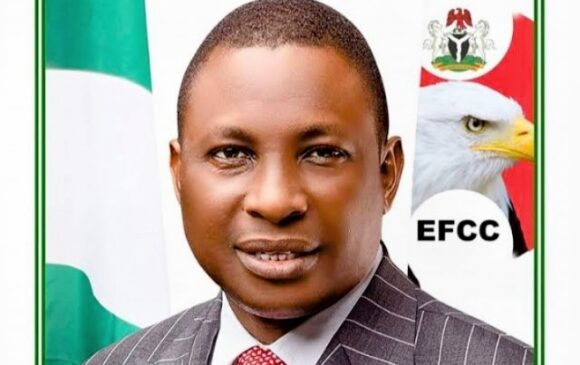
Executive Chairman of the Economic and Financial Crimes Commission (EFCC), Mr. Ola Olukoyede, has cautioned Designated Non-Financial Businesses and Professionals (DNFBPs) to protect their operations from being exploited by criminal elements.
According to him, it is important the DNFBPs ensure they do not expose themselves to activities that compromise Nigeria’s anti-money laundering and counter-terrorist financing (AML/CFT) framework.
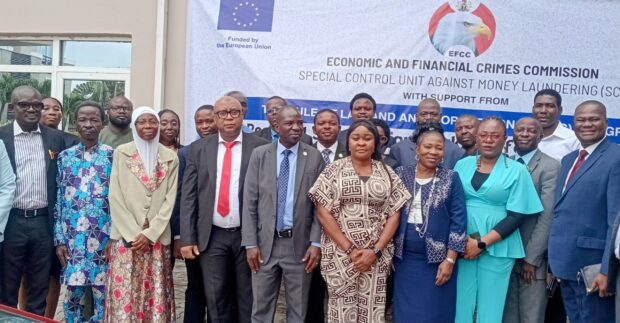
Addressing participants at a two-day sensitization workshop with the theme; “Effective Implementation of Anti-Money Laundering and Combating the Financing of Terrorism (AML/CFT) Measures in the DNFBPs in Nigeria”, Olukoyede said stakeholders in the sector must be alert and proactive in protecting their entities.
He said based on the National Risk Assessment (NRA), the DNFBPs remain the most vulnerable sector to the threats of money laundering and terrorist financing in the country.
In a statement signed by the EFCC spokesperson, Dele Oyewale, the Anti-graft Czar, who noted that criminal actors have continued to evolve in exploiting loopholes within regulatory systems, stressed the need for constant vigilance and improved compliance with all extant laws and regulations in the financial sector.
The EFCC Chairman, represented at the event by Assistant Commander of the EFCC (ACE II), Musa Giwa Yusuf, stated that strategic efforts, in collaboration with the Special Control Unit Against Money Laundering (SCUML) and other stakeholders, are underway to fortify the sector and insulate it from the activities of criminal elements.
Explaining that SCUML is statutorily mandated to monitor, supervise, and regulate the activities of DNFBPs to ensure compliance with AML/CFT standards, Olukoyede described the workshop as “one of the outreach programmes designed to create awareness and build capacity for AML/CFT compliance in the DNFBP sector in Nigeria”.
He said though money laundering and terrorist financing are not only financial crimes, both presents significant threats to national security and economic stability, warning that; “No economy can grow where money laundering is endemic. Its prevalence distorts macroeconomic policies and endangers the financial system”.
While referencing the Financial Action Task Force (FATF)’s 40 Recommendations, Olukoyede said they constitute the international benchmark for combating money laundering, terrorist financing, and the proliferation of weapons of mass destruction (WMD).
He stressed that the primary objective of the workshop was to educate DNFBPs on their obligations under Nigeria’s AML/CFT laws and equip them with the tools and awareness to prevent the misuse of their operations by illicit actors.
For the EFCC boss, “The workshop is also designed to enhance your awareness and understanding of how your organizations could be abused by money launderers and terrorist financiers to perpetrate their unscrupulous activities”.
Also speaking at the occasion, Component Manager for the Rule of Law and Anti-Corruption (RoLAC) Programme, Dr. Emmanuel Uche, commended the EFCC and SCUML for organizing what he described as a “crucial sensitization workshop on AML/CFT/CPF.”
The RoLAC Manager, represented by Patience Samuel Inyang, said the initiative reflected a shared commitment to safeguarding the nation’s financial integrity and overall security.
He warned that money laundering and terrorist financing are not just financial offenses, but serious threats that erode national security, deepen corruption, and obstruct sustainable development.
“We are gathered here today because we recognize the critical role that each of you plays in the fight against these illicit activities,” he said, while canvassing increased collaboration among stakeholders to build a safer and more secure financial system.
Participants at the events were drawn from key regulatory and professional bodies, including the Nigerian Bar Association (NBA), the Lottery Regulatory Office, the Nigerian Institution of Estate Surveyors and Valuers, the Institute of Chartered Accountants of Nigeria (ICAN), and the Real Estate Developers Association of Nigeria (REDA) among others.