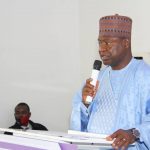
BY SIR JOSEPH N. ARI, KSM
I am very delighted to welcome you all to this Press Briefing and Media Interactive Session, that is intended to bring you up to date and abreast of our activities since we last met and outline our activities for year 2021.
At this juncture, I wish to express our profound gratitude to God Almighty for his steadfast love and abundant mercy that has kept us hale and hearty despite perilous time humanity is passing through. Given the functions that we perform, as journalists and staff of the Industrial Training Fund (ITF), which often require close person to person contact, and without the recommended social distance, it must have taken God’s abiding grace for us to have been spared the ravages of the pestilence. It is in appreciation of the challenges we are contending with, and the need to stay safe and safeguard ourselves that attendance at this briefing has been restricted to a reasonable number that will allow for social distancing. On behalf of Management and Staff of the Fund, I wish to, therefore, apologise to worthy members of the Plateau State chapter of the NUJ that are not here with us today on account of the reasons cited earlier.
Ladies and gentlemen, despite the challenges that I alluded to and its devastating impact on all facets of the national economy, we did not relent in our activities but continued to discharge our responsibilities to Nigeria and Nigerians. What we will present to you today is an account of what we did in 2020 and what we intend to do in 2021 in terms of skills acquisition, direct training services, infrastructural development, the Students’ Industrial Work Experience Scheme (SIWES) as well as Reimbursement among others. In other words, we are presenting our operational guidelines in line with our Mandate for 2021. These are guidelines that are going to impact the national economy in great dimension.
SKILLS INTERVENTION PROGRAMMES
Since the assumption of the incumbent administration in the ITF, our commitment to equipping Nigerians with technical skills for employability and entrepreneurship has never been in doubt. Indeed, for the first time in the Fund’s history, it trained over 500,000 Nigerians in only four years. Our emphasis on skills acquisition has been premised on our firm belief that it remains the most sustainable solution to increasing poverty and unemployment, and the catalyst to economic growth and development. Therefore, in 2020 and despite the challenges of the COVID-19 pandemic, we implemented the following skills intervention programmes: the National Industrial Skills Development Programme (NISDP), Special Skills Development Programme (SSDP), Federal Government Skills Empowerment Programme (FEGOSEP), Info-Tech Skills Empowerment Programme (ISEP), and Agri-Preneurship Training Programme (ATP). Together, the programmes trained thousands of Nigerians that were empowered with start-up packs for them to set up on their own.
This year, which we have declared as the year of “Skills Escalation for Prosperity,” we have commenced processes for the implementation of more skills intervention programmes. The Programmes earmarked for implementation are namely: the National Industrial Skills Development Programme (NISDP), the Construction Skills Empowerment Programme (CONSEP), the Skills Training and Empowerment Programme for the Physically Challenged (STEPP-C), the Passion to Profession Programme (P2PP), and the Agri-Preneurship Training Programme (ATP).
In all, the programmes will train about 12,000 Nigerians between three and six months in the following trade areas: Web design and programming, Advance Computer networking, Mobile app development, Iron bending, Masonry, Crop production, Aquaculture, Poultry, Air-Conditioning and Refrigeration, Plumbing, GSM repairs and Ladies’ wig cap making.
Apart from the NISDP that will be implemented in all states of the Federation including the FCT, the rest of the skills intervention programmes will be shared amongst the states. What this means is that whereas some of the states will benefit from one of the skills intervention programmes, others will benefit from two or even three of the programmes. The decision as to which state benefits from a particular programme was based on the likelihood of participants to eke out sustainable livelihoods because of the needs of the states for such particular skills.
It is noteworthy that in appreciation of our efforts to equip Nigerians with requisite skills, and our contributions to the development of the Micro, Small and Medium Enterprises (MSMEs) sector in Nigeria, the ITF was named as a member of the Steering Committee of the Federal Government’s Survival Fund that was constituted by the Federal Government to drive the implementation of the various support schemes for MSMEs in the country as part of the National response to the COVID-19 pandemic and as part of Government’s Social Investment Programmes under the Economic Sustainability Plan.
Similarly, the ITF was among the few Agencies requested by the Federal Government to forward submissions on lifting 100 million Nigerians out of poverty in 10 years. If our proposal, which is currently receiving the attention of the authorities is assented to, the ITF will train over 7million Nigerians in the Agriculture, Construction and Facility Maintenance, Information and Communication Technology, Manufacturing and Services sectors between 2021 and 2031.
We believe that until most Nigerians are equipped with competitive technical skills, we will, as a Nation, continue to fight a losing battle against the blights of poverty and unemployment and their attendant consequences. Our belief is inspired by success stories from countries like Japan, Germany, Vietnam, Singapore and Brazil that transformed into industrial power-houses using technical skills acquisition. We can do the same.
COLLABORATIONS AND PARTNERSHIPS
As part of further efforts to equip Nigerians with requisite skills, the Fund entered into collaborations and partnerships with local and international organisations. Currently the ITF is in partnership with SENAI of Brazil, Institute of Technical Education Services (ITEES) of Singapore, Galilee International Management Institute (GIMI) in Isreal, International Labour Organisation (ILO), United Nations Industrial Development Organisation (UNIDO), Nigeria Employers’ Consultative Agency (NECA), Small and Medium Enterprise Development Agency of Nigeria (SMEDAN), Bank of Industry (BoI), the Nigerian Content Development and Monitoring Board (NCDMB) as well as the Nigerian Association of Chambers of Commerce, Industry, Mines and Agriculture (NACCIMA) amongst others.
In 2020, the ITF entered into an MoU with the National Youth Service Corps (NYSC) for up-skilling of serving Corps members. We consider the partnership with the NYSC very strategic in view of dwindling opportunities for white collar jobs. We believe that equipping corps members with technical skills will prepare them for self reliance after NYSC. The Fund also signed a Memorandum of Understanding with the Federal Ministry of Youth and Sports Development (FMYSD) to train 23,130 youths in the 36 states of the Federation and the FCT under the Ministry’s Youth Skills Development and Entrepreneurship Programme (YOSDEP) in 22 trade areas.
Early this year, we also signed another agreement with the Nigerian Defence Academy (NDA) for capacity building of staff of the Academy and exchange of faculty members for short periods for a greater understanding of different teaching and learning styles within the two organisations.
The ITF will continue to pursue such partnerships in view of the integral role they have played in the actualisation of our Mandate. For instance, our collaboration with ITEES of Singapore led to the establishment of the Model Skills Training Centre (MSTC), Abuja which is the most modern skills centre of its kind in Nigeria. Similarly, our collaboration with SENAI of Brazil led to the acquisition of Mobile Training Vans that we deploy for training of Nigerians in hard-to-reach areas. In the same vein, our partnership with the umbrella body of the Organised Private Sector, NECA, gave birth to the Technical Skills Development Programme (TSDP) which is a perfect example of Public Private Partnership.
INFRASTRUCTURAL DEVELOPMENT
Another key focus of the incumbent Management has been the development of the Fund’s infrastructure in line with the Federal Government’s commitment to the reduction of infrastructure deficits and to open access to Nigerians desirous of acquiring technical skills. In this regard, the ITF completed and commissioned several projects just before the outbreak of the COVID-19 pandemic. The projects, which were commissioned by the Honourable Minister of the Federal Ministry of Industry, Trade and Investment, Otunba Richard Adeniyi Adebayo, CON, and his counterpart, the Honourable Minister Of State For Industry, Trade And Investment, Hajiya Mariam Yalwaji Katagum included the Mechatronics Workshop and Administrative Block at the Industrial Skills Training Centre (ISTC), Kano; Katsina Area Office Complex, Katsina; Lagos Island Area Office Complex; the Modern Library Complex and Central Store at the ITF Headquarters in Jos and the ITF Staff School Classroom Block.
Despite the pandemic, we continued with the pace of development on several other projects that have been completed and are awaiting commissioning. They include the Gusau Area Office Complex and Vocational Wing, Minna Area Office Complex and Vocational Wing, Aba Area Office Complex and Vocational Wing, and Awka Area Office Complex and Vocational Wing. Others are the Multi-purpose Building in Maitama, Abuja, the proposed Institute of Hospitality Management at Oba Akran in Lagos, Headquarters Auditorium and Gymnasium, the Access road to the Headquarters Auditorium and Gymnasium and a special Agriculture Green-house at Ofada-land in Ogun State. All these projects will be commissioned before the end of the year. We believe that if access to our services is made easier through increased infrastructural development, the Fund will enjoy greater patronage of Nigerians that are increasingly aware of the importance of skills acquisition.
The Fund also purchased the Jossy Royal Hotel, which is adjacent to our Centre for Excellence in Bukuru, following the approval of the Federal Executive Council (FEC) in 2020. The facility, which has 59 rooms, a conference hall, an annex, a kitchen and restaurant as well as a laundry section and workshops, will be used to train Nigerians along the hospitality value chain. It will equally enhance the scope of operation of the Centre for Excellence, which has now been structured into faculties.
To further deepen and expand the scope of our operations, we established two new Area Offices at Gombe in Gombe State and Ikorodu in Lagos State, which are already fully operational.
DIRECT TRAINING SERVICES
One of the core functions of the Fund is the provision of direct training services to employers of labour for them to be productive and perform optimally. In line with this, despite lockdowns occasioned by the Coronavirus pandemic in 2020, the Fund through its scheduled and unscheduled training programmes, trained thousands of employees in over 200 organisations across the country.
Bearing in mind the difficult times our stakeholders were passing through on account of the pandemic, some of the programmes implemented included three programmes of nine modules each that were deployed free of charge to employers of labour. The programmes are namely: Re-Engineering the Workplace in Challenging Times, Digital Marketing for Profitability and Workforce Health and Safety Programme.
In addition, in order to provide training that is responsive to the needs of the industrial and commercial sectors of the National economy, the Fund conducts regular Training Needs Assessment (TNA) surveys to identify the needs of our clients. In 2020, based on these surveys, we developed 12 new training programmes, namely; Workshop on International Public Sector Accounting Standards, Workshop on Cyber Hygiene for Operational Optimization, Workshop on Business Model Canvas for Transformation, Workshop on Robotic Process Automation, Workshop on Pneumatics Automation, Workshop on Basic Auto Diagnostic Skills, Workshop on Talent Management and Succession Planning for Organisational Sustainability, Workshop on International Financial Accounting Standards, Workshop on Marketing Analytics for Future Projections, Workshop on Optimizing Human Resource Practice through Technology in Organisations, Workshop on Reliability and Maintainability, and Workshop on Optimizing Workforce Health for Improved Productivity.
We also reviewed some of our programmes to address emerging challenges including: Workshop on Digital Marketing for Profitability, Workshop on People Management Skills for Excellent Service Delivery, Workshop on Managing Production for Profitability, Workshop on Quality Assurance Management, Workshop on Information and Communication Technology Management, and Workshop on Digitization of Documents and Records for Effective and Efficient Business Operations.
The Fund will continue to be responsive to the needs of all its stakeholders in order for them to be productive and grow the National economy. This year, we are poised to do more in this regard as most of our stakeholders are still struggling to overcome the ripple effects of the Covid-19 pandemic and will be expecting us to provide quick fix capacity solutions for their businesses.
ICT AND AUTOMATION OF SERVICES
The Coronavirus pandemic has shown that the development of physical infrastructure alone is no longer enough.
Fortunately, as a dynamic and proactive organisation, the ITF had automated most of its business processes which made it easier for the Fund to conduct our operations even with the restrictions and disruptions caused by the pandemic. E-platforms were already created for the Students’ Industrial Work Experience Scheme (SIWES) and the Reimbursement Scheme, while the Electronic Resource Programme (ERP), which enables the staff to carryout various work-related activities was also deployed. The Fund is also currently in the process of launching its online Learning Management System (LMS), to carryout online training programmes, which are becoming a real alternative to classroom type training.
We will continue to aggressively invest in the development of our Information and Communication Technology (ICT) infrastructure for deployment of our training activities and other functions of the Fund.
NEW ADMINISTRATIVE STRUCTURE AND STAFF WELFARE AND DEVELOPMENT
I am pleased to announce that the Federal Government has approved a new administrative structure for the Fund. Under the new structure that came into operation in 2020, four new departments were created namely: the Public Affairs Department, Standardisation, Certification and Consultancy Services Department, Internal Audit Department and Legal and Council Affairs Department. One Unit called Estate Management Unit was also created, leading to a 14 Department and two Unit structure for the Fund. The development is to address the areas of the Fund’s Mandate that hitherto did not receive maximum attention, as well as to match the expanded scope of operations. With this new structure, we are poised to discharge all aspects of our Mandate.
With regards to staff welfare and development, the Management of the Fund continued to implement welfare packages to motivate the workforce for optimal performance as it is universally acknowledged that when employees are fully motivated, they become more committed to their duties and are generally more productive.
With this in mind, therefore, even when most organisations ceased payment of salaries on account of the disruptions of the pandemic, all allowances and salaries of staff of the Fund were paid as and when due. Long service awards were also given to members of the workforce who had served the Fund meritoriously for 30, 25, and 15 years, just as others were sponsored on various long and short term development programmes.
Similarly, we conducted the 2020 promotion examinations and successful staff were promoted to their new levels with all arrears paid in full.
The commitment of Management is to ensure that all staff of the Fund are trained and motivated for optimal productivity.
STUDENTS’ INDUSTRIAL WORK EXPERIENCE SCHEME (SIWES)
As our brain child and in view of its integral role in the training of Students of Engineering, Technology and other Allied disciplines in our tertiary Institutions, the ITF accords priority attention to management of the Scheme. In 2020, the Fund reviewed the Scheme’s processes for seamless and more effective management in light of prevailing challenges and to fully actualise its objectives. For instance, to ease interactions between and with relevant stakeholders, thereby reduce person to person contact, a website dedicated to SIWES was developed, and launched during the 14th SIWES National Biennial Conference of October 2020 in Abuja.
Similarly, the Fund ensured the payment of students and supervisory allowances. In all, Six Hundred and Thirty Two Million, Nine Hundred and Thirty Five Thousand Naira (N632,935,000.00) was paid as Student allowance while Seventy Seven Million, Seven Hundred and Eighteen Thousand, Seven Hundred and Fifty Naira (77,718,750.00) was paid as supervisory allowance between January 2020 and June 2020.
I want to assure of our commitment to prompt payment of students and supervisors’ allowances as soon as money is received by the Fund from the Federal Government.
REIMBURSEMENT
In line with our Act, the Fund re-imburses contributing employers up to fifty percent of the statutory annual training contributions remitted by them if the Fund’s Governing Council is satisfied that training programmes of the employer were in accordance with the Fund’s Reimbursement Scheme. Since assumption to office of the incumbent Management of the ITF, we have zealously worked towards fulfilling this aspect of our mandate.
In line with this, a total of Three Billion, Nine Hundred and Forty One Million, Nine Hundred and Fifty Eight Thousand, Seven Hundred and Ninety Five Naira, Fifty Seven Kobo (N3,941,958,795.57) was paid to 325 companies as reimbursement for year 2019.
In addition, the Fund organised several reimbursement workshops to apprise employers of labour on the processes involved in the Re-imbursement Scheme.
ITF GOLDEN JUBILEE CELEBRATION
Ladies and Gentlemen, this year, the Industrial Training Fund will be marking its Golden Jubilee. As you may be aware, the ITF was established on 8th October 1971 and will, therefore, be 50 this year. This for us is a major landmark that ought to be celebrated, especially when you consider the challenging environment that we have had to operate.
We are particularly exultant that the Fund has not merely existed for 50 years but has contributed meaningfully to the growth and development of our great country by training over 25 million Nigerians that are manning key sectors of the national economy. The ITF has also left telling and bold footprints on the Human Capital Development Sub-sector in Nigeria. For instance, the Students’ Industrial Work Experience Scheme (SIWES) that has become an integral part of the training of Students of tertiary institutions in Engineering, Technological and other Allied disciplines is a brain child of the ITF. You will recall that in 1972, the ITF conducted a survey that discovered the yawning gap between theories imparted to students of tertiary institutions and obtainable practices in industries. The research led to the establishment of the Scheme that has survived till date.
Apart from SIWES, we have pioneered a number of other activities in the Human Capital Development sub-sector including: Direct Training Services, In-plant Training, the Payment of Re-imbursement and promotion of Apprenticeship Scheme.
Within the last few years, we have continued to set the pace. For instance, the Skills Gap Survey of Six Priority Sectors of the National economy, which the Fund carried out in collaboration with the United Nations Industrial Development Organisation (UNIDO), remains till date the most reliable document on the skills gap in the National economy.
In addition, our efforts to mobilise the country to accept skills as a sustainable solution to most of the problems that currently blights the country should also be acknowledged and commended. As part of our efforts in this regards, the ITF organised the first National Skills Summit in Nigeria which attracted Captains of Industries, Technocrats, Academics and Policy Makers on the way forward for skills acquisition in Nigeria.
Although not an exhaustive list of our achievements, what I have said should provide you good reasons why our Golden Anniversary should be celebrated. However, in view of the prevalence of the Coronavirus pandemic, our celebrations will be scaled down to few events that we will inform you of in due course.
At this juncture, on behalf of Management and the entire Staff of the Industrial Training Fund, I want to express our profound appreciation to the entire membership of the Nigerian Union of Journalists nationwide, for your tremendous support to us through positive and extensive coverage of our activities. That the ITF today is on everybody’s lips is because of your reportage of our activities. As an organisation that believes in the role of journalists to transform economies of the world through constructive reportage, we want to assure you that we will continue to work with the council and its members by granting you access to make your task easier.
Thank you for honouring our invitation and may God continue to protect and preserve us through these tough times.
Thank you for listening.
Being a text of a press briefing by the Director General/Chief Executive of the Industrial Training Fund (ITF), Sir Joseph Ari, held on Wednesday, March 24, 2021 at the ITF Headquarters, Jos.