- Recoups N2trn intervention funds
- Says N4.69trn still outstanding
BY COBHAM NSA – The Central Bank of Nigeria (CBN) yesterday kept the Monetary Policy Rate (MPR) at 27 percent, hinting on the need to let the effect of previous policy rate hikes sufficiently transmit to the real economy and further reduce prices
MPR serves as the baseline interest rate in an economy; with other interest rates deployed within the economy built on it.
This is as the apex bank revealed that while 16 banks have already met the new minimum capital requirements, 27 others have recorded raised capital ahead of the March 31, 2026 deadline.
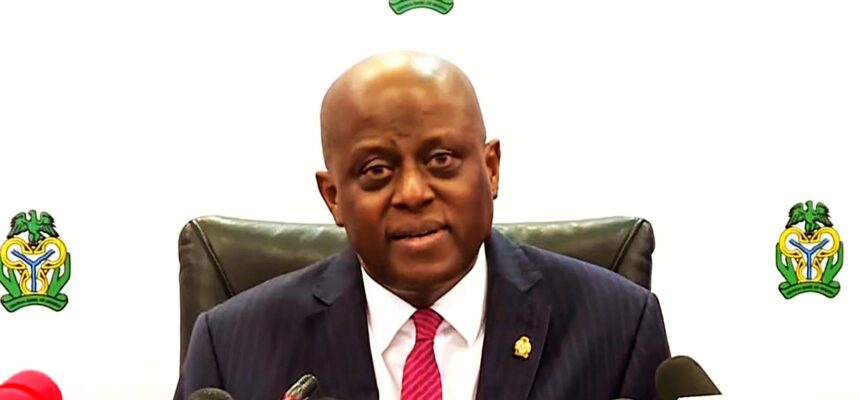
Briefing journalists at the end of the last Monetary Policy Committee (MPC) meeting for the year in Abuja on Tuesday, CBN Governor, Olayemi Cardoso also said about N2 trillion of the intervention funds have been recovered in two years, with about N4.69 trillion still outstanding.
Rising from the MPC’s 303rd meeting, Cardoso said the MPC is committed to maintaining a tight monetary stance, even as it pegged the Cash Reserve Ratio (CRR) at 45 percent for commercial banks, 16 percent for merchant banks, and 75 percent on non-TSA public sector deposits.
Additionally, the Committee voted to maintain the Liquidity Ratio (LR) at 30 percent, adjusting the Standing Facilities Corridor to +50/-450 basis points around the MPR.
The CBN Governor further explained that the decisions reflect its focus on achieving low and stable inflation as it welcomed the continued deceleration in headline inflation, driven by sustained monetary tightening, stable exchange rate, and PMS price stability.
Also noting that inflation remains high, requiring continued and coordinated policy efforts to bring it down further, Cardoso said the MPC’s decision was underpinned by the need to sustain the progress made so far towards achieving low and stable inflation.
He further said; “The MPC reaffirmed its commitment to a data driven assessment of development and outlook to guide future policy decisions, considerations. The committee welcomed the continued deceleration in headline inflation year-on-year for the seventh consecutive month
“This favorable development resulted from several factors, including sustained monetary policy tightening, stable exchange rate, increased capital flows and surplus current account balance.
“In addition, the relative stability in the price of premium motor spirit, PMS and improved food supply supported the pace of disinflation.
“However, headline inflation remains high at double digit, requiring sustained efforts towards moderating it further. The committee was therefore of the view that the steady deceleration in inflation across the three measures, headline, core and food in October 2025 suggests that the large impact of previous tight policy measures is expected to continue in the near term, thus maintaining the current stance of policy amidst lingering global uncertainties would allow the effect of previous policy rate hikes to sufficiently transmit to the real economy and further.”
Addressing issues around intervention funds, he said the CBN cannot introduce new programmes because of the huge amount still outstanding from past interventions, adding that the unfortunate development has limited its ability to support new initiatives
“Now, we did a survey, a small study, of interventions in the central bank. And we came out with certain numbers, which showed that intervention, total amount of intervention was about N10.93 trillion, which goes back perhaps 2010 or 2013.
“Now, out of that, we still have an outstanding of N4.69 trillion, which represents about 43 percent of those interventions. Since coming on board, we’ve been able to rein in about N2 trillion. This is a humongous amount of money”, the CBN boss explained.
On bank recapitalisation, Cardoso said the exercise is progressing steadily, describing it as orderly and consistent with the regulator’s expectations.
He said, “We are monitoring developments, and indications show the process is moving in the right direction”.
It is on record that as of April 2025, available statistics indicate that Nigeria has 44 deposit-taking banks, including seven commercial banks with international authorisation, 15 with national authorisation, and four with regional authorisation.
The list also include four non-interest banks, six merchant banks, seven financial holding companies and one representative office.
By the CBN’s recapitalization framework, banks must raise their paid-in share capital to levels that tally with the scope of their operations. While International commercial banks are required to attain N500 billion, national commercial banks have a target of N200 billion, with regional commercial banks given N50 billion as their new capital requirement.