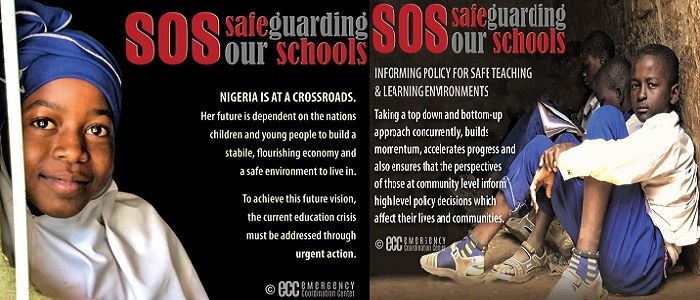
- Over FG’s inability to guarantee safer schools for children
- Finance Minister Ahmed promises better days ahead
BY COBHAM NSA – World Bank Country Director for Nigeria, Shubham Chaudhuri has warned that the country currently risks a human capital development crisis over the Federal Government’s inability to guarantee a safe learning environment for its children nationwide.
Speaking at the High-Level Summit for Castle – Safeguarding Our Schools: Protecting Our Children and Our Future in Abuja on Thursday, Chaudhuri, warned that if the government fails to adopt an all-inclusive approach to protecting and securing the children, many of them would be denied their right to education in years to come.
The World Bank representative said the drawback is regrettably playing out already with the closure of schools in the Federal Capital Territory (FCT) due to threats of abduction and kidnapping, warning that the disturbing development will further increase the number of out-of-school children in the country.
Speaking at the occasion, the Minister of Finance, Budget, and National Planning, Mrs Zainab Ahmed, admitted Nigeria has over the past several years faced major security challenges, including attacks on schools and other learning places, leading to the closure of schools in impacted and most at-risk communities.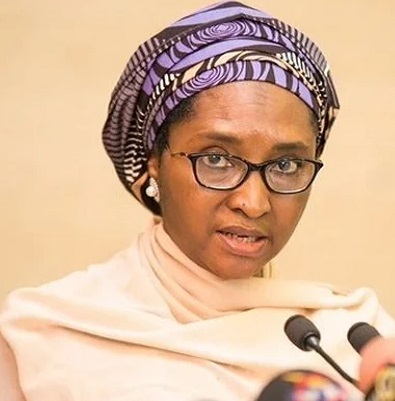
She however said the “Nigerian Government, in keeping with its responsibility to create a safer and more secure teaching, learning and living environment for her children, has taken several steps in this direction”, noting that as part of efforts to tackle these crises, the Federal Government, in 2014, launched the Safe School Initiative (SSI), which focused on enabling children affected by conflict and insecurity to continue with their education unhindered.
Represented by the Permanent Secretary, Dr. Aliyu Ahmed, the Minister said, determined to turn things around for the better, President Muhammadu Buhari formally signed the Safe Schools Declaration Ratification Documents on December 31, 2019, signaling the country’s commitment to implementing the intergovernmental commitment in Nigeria.
She said the Federal Government is already engaging States, local governments, and other critical agencies “to identify the most transparent, effective, and accountable ways of mobilizing and deploying resources”, adding; “The National Plan will be implemented in phases starting with the Most-at-Risk States, Local Governments and Schools Host Communities.
“This National Plan is expected to be launched before the end of the 3rd quarter of 2022, and will clearly outline how Nigeria intends to protect her schools and other learning places so that our children can once again return to learning in a safer and more secured environment.”
Also commenting on additional efforts at addressing the issues of safe schools in the country, Mrs Ahmed said; “We at the Federal Ministry of Finance and National Planning established a committee with members drawn from relevant Ministries, Departments, and Agencies (MDAs), including Federal Ministry of Education, the Military and other Security Agencies. The Committee has been working to collate inputs from the relevant MDAs and to develop a National Plan for Financing Safe Schools.”
She further explained that “The plan will incorporate state-level plans, as well as Federal Government sectoral plans, with an emphasis on ensuring adequate budgetary allocation in order to create a safe learning environment for teaching, learning, and restoring confidence in the education system.”
According to her, the goal is to develop robust collaborative efforts that prioritize the plan which would adopt the whole society approach to safe schools, adding that to further demonstrate the government and Nigerians’ resolve to address the serious challenges posed by conflicts and insecurity to safe schools, and in consultation with local and global stakeholders, “we convened (in partnership with the Emergency Coordination Center, UNICEF, and other stakeholders) a High-Level Forum on Financing Safe Schools, culminating in a collective set of commitments reflected in the Abuja Compact In October 2021, Nigeria hosted the Fourth International Conference on the Safe Schools Declaration.”
She said; “The summit was aimed to galvanize needed support for the declaration and to review progress in achieving the various commitments to protect schools and children from further attacks.”
The Minister appreciated Dr. Ayoade Alakija, who is WHO Special Envoy for the Access to COVID-19 Tools Accelerator (ACT-Accelerator), for her great efforts and support, including organizing and hosting the high-level summit, saying; “The incredible work undertaken by the Emergency Coordination Center over the past eight (8) months (emphasizing the first-hand narratives, and data collected from communities and schools across the country) will undoubtedly prove invaluable as we work collectively to develop and fund integrated solutions to the issue of school safety in Nigeria.”
Currently, available statistics indicate that there are about 18.5 million out-of-school children in Nigeria, a figure that has risen since 2001, according to the United Nations Children’s Fund (UNICEF).
Of this worrying figure posted by Africa’s most populous country, UNICEF said 60 percent, which is more than 10 million, are girls.